
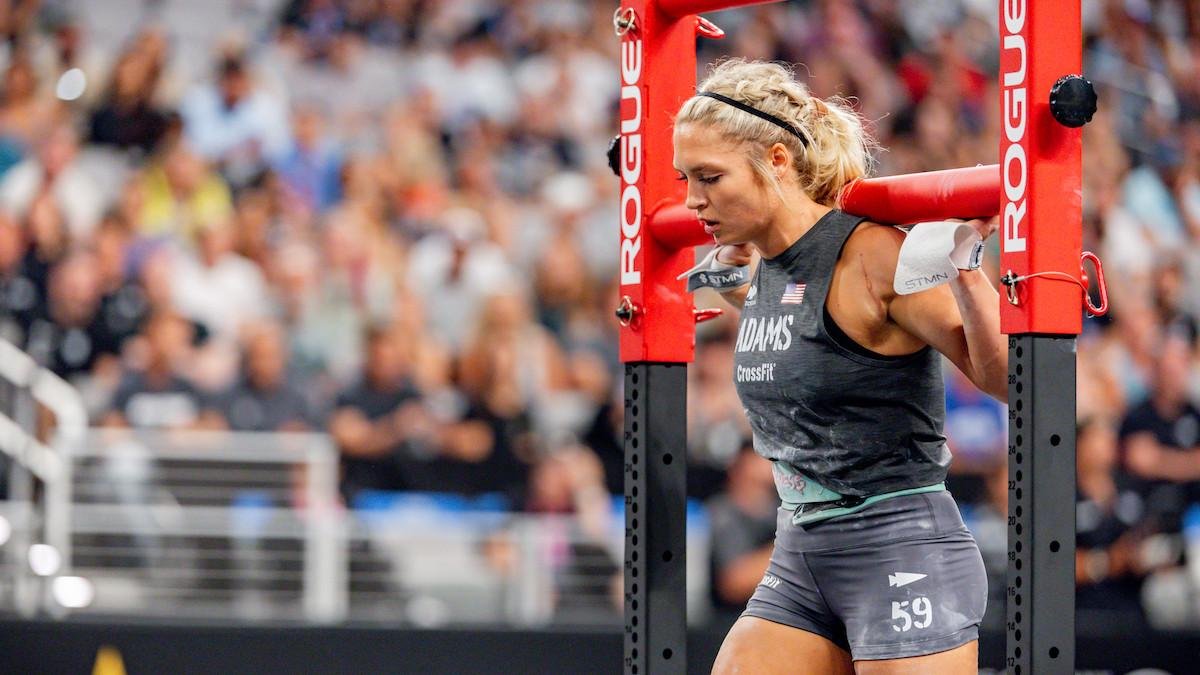
For years, Haley Adams represented one of the brightest young stars in the CrossFit Games ecosystem.
She was relatable, gritty, undersized by elite CrossFit standards, and relentlessly determined. Fans gravitated toward her authenticity as much as her performances. In a sport increasingly dominated by polished branding and machine-like consistency, Adams felt human.
That humanity may ultimately become the most important part of her story.
Because Haley Adams’ recent career has not simply been about podiums, rankings, or workouts. It has become a much larger conversation about pressure, burnout, identity, and what happens when one of the sport’s most recognizable athletes decides that surviving mentally matters more than competing endlessly.
The Rise of a Fan Favorite
Adams burst onto the elite scene at a young age and quickly built a reputation as one of the toughest competitors in the women’s division.
Despite lacking the sheer size and power of many rivals, she consistently outperformed expectations through conditioning, grit, and relentless effort. Fans watched her attack workouts with visible emotion and determination, often pushing through events with an intensity that made her instantly memorable.
Her style resonated because it looked attainable in a sport increasingly filled with superhuman performances.
She wasn’t the biggest lifter on the floor. She wasn’t the most physically imposing athlete. Yet she repeatedly proved she belonged among the best in the world.
That underdog identity helped make Adams one of CrossFit’s most popular athletes.
The Pressure of Constant Competition
But elite CrossFit comes at a cost.
The modern Games season is physically punishing, emotionally exhausting, and mentally consuming. Training volume can feel endless. Recovery becomes a full-time responsibility. Every weakness is exposed publicly, analyzed online, and discussed across social media.
For athletes who grow up inside that environment, the pressure can quietly become overwhelming.
Adams eventually stepped back from competition and openly discussed struggles related to burnout, mental health, and disordered eating — topics that have historically remained uncomfortable conversations within functional fitness culture.
Her honesty immediately shifted the tone of the conversation surrounding elite CrossFit.
Instead of pretending that suffering was simply part of the game, Adams acknowledged the emotional realities many athletes experience behind the scenes. For many fans, it was the first time a major CrossFit athlete spoke openly about the psychological strain created by the sport’s relentless demands.
Redefining Strength
What made Adams’ story resonate was that her vulnerability did not feel manufactured.
There was no polished corporate messaging. No carefully scripted redemption arc. Instead, there was a young athlete trying to figure out who she was outside constant competition.
In many ways, that honesty expanded her influence far beyond the competition floor.
CrossFit culture has long celebrated extreme discipline, sacrifice, and pushing through pain. Adams introduced a more nuanced message: that health is not simply physical, and that stepping away can sometimes require more courage than continuing to compete.
For younger athletes especially, that message mattered.
The sport continues to evolve physically, but it is also being forced to mature emotionally. Conversations about recovery, mental health, sustainability, and identity are becoming increasingly unavoidable as athletes face longer seasons, greater scrutiny, and growing commercial expectations.
Adams helped accelerate those conversations.
The Return
Now, as she re-emerges within the competitive landscape, the narrative surrounding Adams feels different.
The expectations are no longer solely about whether she can stand on a podium. Instead, many fans simply want to see her healthy, enjoying the sport again, and competing on her own terms.
Ironically, that mindset may make her more dangerous than ever.
When Adams is physically healthy and emotionally engaged, she remains one of the most capable conditioning athletes in the field. Her engine, pacing ability, and competitive toughness still make her a threat in nearly any endurance-heavy event.
And while newer stars continue rising through the ranks, experience still matters at the highest levels of the Games.
Adams understands the pressure of the spotlight. She understands the emotional swings of competition weekends. Most importantly, she understands what it feels like to lose herself inside the sport — and what it takes to fight back.
More Than Results
Whether Haley Adams ultimately returns to podium contention almost feels secondary to the larger significance of her journey.
In a culture that often glorifies endless grinding, she reminded people that athletes are not machines.
Her career has become about more than fitness. It has become about balance, identity, resilience, and learning that worth cannot be measured solely by leaderboard standings.
That perspective may end up being her greatest contribution to CrossFit.
Because while championships define careers, honesty changes culture.
And Haley Adams has already done that.