
Every year, predictions surrounding the CrossFit Games walk a dangerous line between analysis and fantasy.
The sport changes too quickly. Programming remains unpredictable. Injuries can alter the leaderboard overnight. One failed lift, one brutal endurance event, or one strategic mistake can erase an entire season’s worth of preparation.
But heading into the 2026 season, one thing feels increasingly clear:
CrossFit is entering a transition period.
The dominant era of untouchable champions appears to be fading, replaced by a younger, deeper, and increasingly volatile field where multiple athletes now look capable of taking control of the sport’s future.
And when the Games arrive at SAP Center this July, the competition may feel less like a continuation of the past and more like the start of something entirely new.
Jayson Hopper and the Pressure of Staying on Top
The men’s division begins with one unavoidable question:
Can Jayson Hopper do it again?
Winning a CrossFit championship changes an athlete’s reality instantly. Expectations become heavier. Weaknesses become more visible. Every performance is scrutinized through the lens of defending a title.
Hopper enters 2026 no longer as an emerging talent, but as the man everyone is chasing.
Physically, he has the tools to repeat. His explosiveness remains elite. His gymnastics efficiency and competitive intensity make him one of the most dangerous athletes in nearly any event format. More importantly, his overall consistency improved dramatically during his championship run.
The challenge now becomes managing pressure.
CrossFit history has repeatedly shown that defending a title is often harder than winning the first one. The psychological burden alone can derail even the most gifted athletes.
Still, Hopper appears built for the spotlight.
If he avoids catastrophic finishes during endurance-heavy events and maintains composure deep into the weekend, another podium finish feels highly realistic — and a repeat title is entirely possible.
Roman Khrennikov’s Window May Be Narrowing
No athlete carries more emotional support entering 2026 than Roman Khrennikov.
For years, Khrennikov has remained near the top of the sport despite injuries, setbacks, and circumstances that repeatedly interrupted momentum. Yet he continues to survive every challenge the Games throw at him.
That resilience has transformed him into one of the most respected competitors in CrossFit.
But time matters.
The men’s field is becoming younger, faster, and deeper every season. Athletes entering the sport now are arriving with refined movement patterns, advanced recovery strategies, and years of CrossFit-specific preparation from an early age.
Khrennikov still possesses elite strength and conditioning, but 2026 increasingly feels like one of his best remaining opportunities to capture a championship before the next generation fully takes over.
And if he finally wins in San Jose, it may become one of the most celebrated moments in modern CrossFit history.
Emma Lawson Looks Ready Right Now
For years, Emma Lawson has been described as the future of women’s CrossFit.
That language may already be outdated.
Lawson no longer looks like a developing athlete trying to gain experience. She increasingly looks like a legitimate title contender.
What separates Lawson is not simply athleticism — although she possesses plenty of that. It is her composure. She rarely appears emotionally rattled, even during high-pressure moments. Her pacing remains controlled. Her movement quality rarely deteriorates under fatigue. Most importantly, she avoids disastrous finishes.
In modern CrossFit, that consistency often matters more than spectacular event wins.
The women’s field is entering a fascinating transition phase. The dominance of past eras has given way to a far more competitive landscape where multiple athletes appear capable of winning major events.
Lawson appears positioned directly at the center of that shift.
If her strength progression continues, 2026 could become the season she officially arrives as one of the faces of the sport.
Haley Adams May Become the Emotional Story of the Games
While some athletes chase championships, Haley Adams enters 2026 carrying a different type of narrative.
After openly discussing burnout, mental health struggles, and stepping away from competition, Adams’ return has become about far more than leaderboard placement.
Her honesty reshaped conversations surrounding athlete wellness within CrossFit culture. In a sport that often glorifies endless grinding and emotional suppression, Adams reminded fans that elite athletes are still human beings.
Now she returns healthier, more balanced, and perhaps more dangerous than many realize.
At her best, Adams remains one of the premier conditioning athletes in the field. If programming emphasizes endurance, bodyweight movement, and pacing strategy, she could immediately disrupt the leaderboard.
Whether she reaches the podium or not, her presence alone may become one of the defining emotional storylines of the Games.
The Women’s Division Has Never Been Deeper
Perhaps the most significant development entering 2026 is the growing parity within the women’s field.
Athletes like:
Emma Lawson
Paige Rodgers
Laura Horvath
Lucy Campbell
Olivia Kerstetter
are creating a division where no single athlete appears untouchable anymore.
That unpredictability changes everything.
Instead of watching one dominant champion slowly separate from the field, fans may witness constant leaderboard movement throughout the weekend. The margin between first and fifth could become razor thin.
For spectators, that level of uncertainty creates drama the sport has not consistently seen in years.
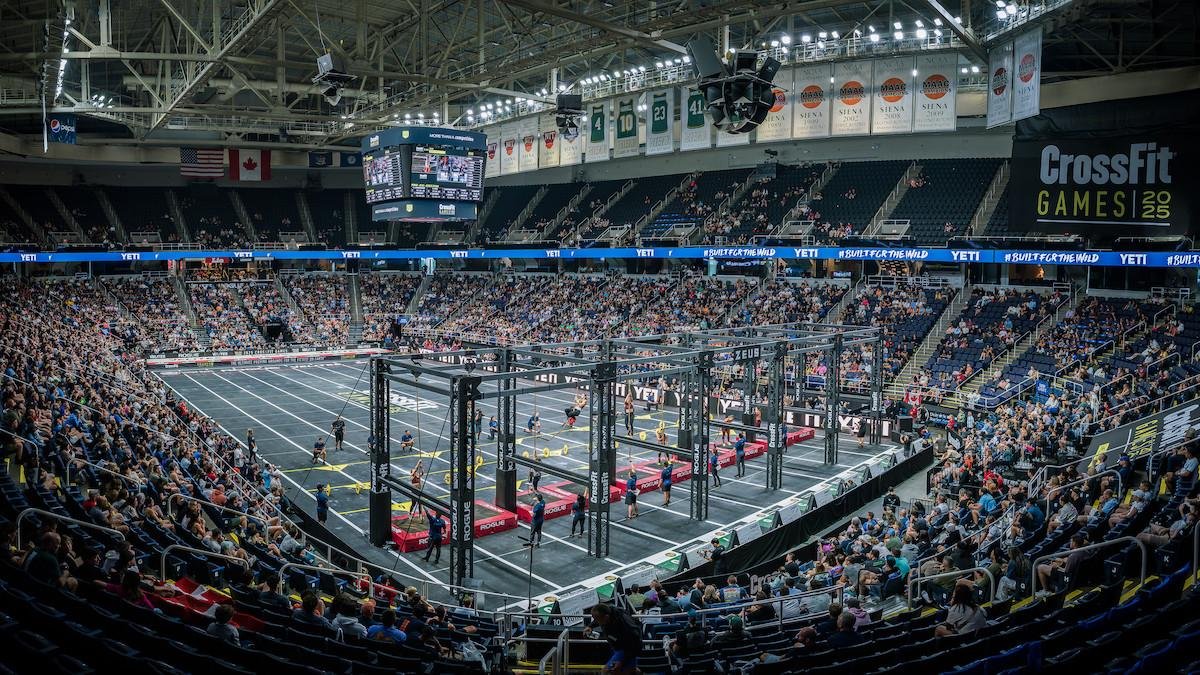
San Jose Could Change the Feel of the Sport
The move to SAP Center may subtly reshape the Games themselves.
Arena-based competition tends to create:
faster pacing,
louder environments,
more direct athlete battles,
and greater crowd influence.
That atmosphere often benefits explosive competitors and athletes who thrive emotionally in head-to-head racing formats.
It also returns CrossFit to California, where the sport was originally born.
For the 20th edition of the Games, that symbolism feels significant.
A Sport in Transition
More than anything else, the 2026 season feels like a bridge between generations.
Veterans are still dangerous. Champions are still standing. But younger athletes are no longer waiting patiently for their turn.
They are arriving now.
The modern CrossFit athlete is more specialized, more technically refined, and more professionally prepared than ever before. Recovery science, nutrition, movement efficiency, and sports psychology have become as important as raw fitness itself.
The result is a Games field that may be deeper and more unpredictable than any before it.
And that unpredictability is exactly what makes this season so compelling.
Because for the first time in years, the question entering the CrossFit Games is not simply who can defend a title.
It is who will define the next era of the sport.